
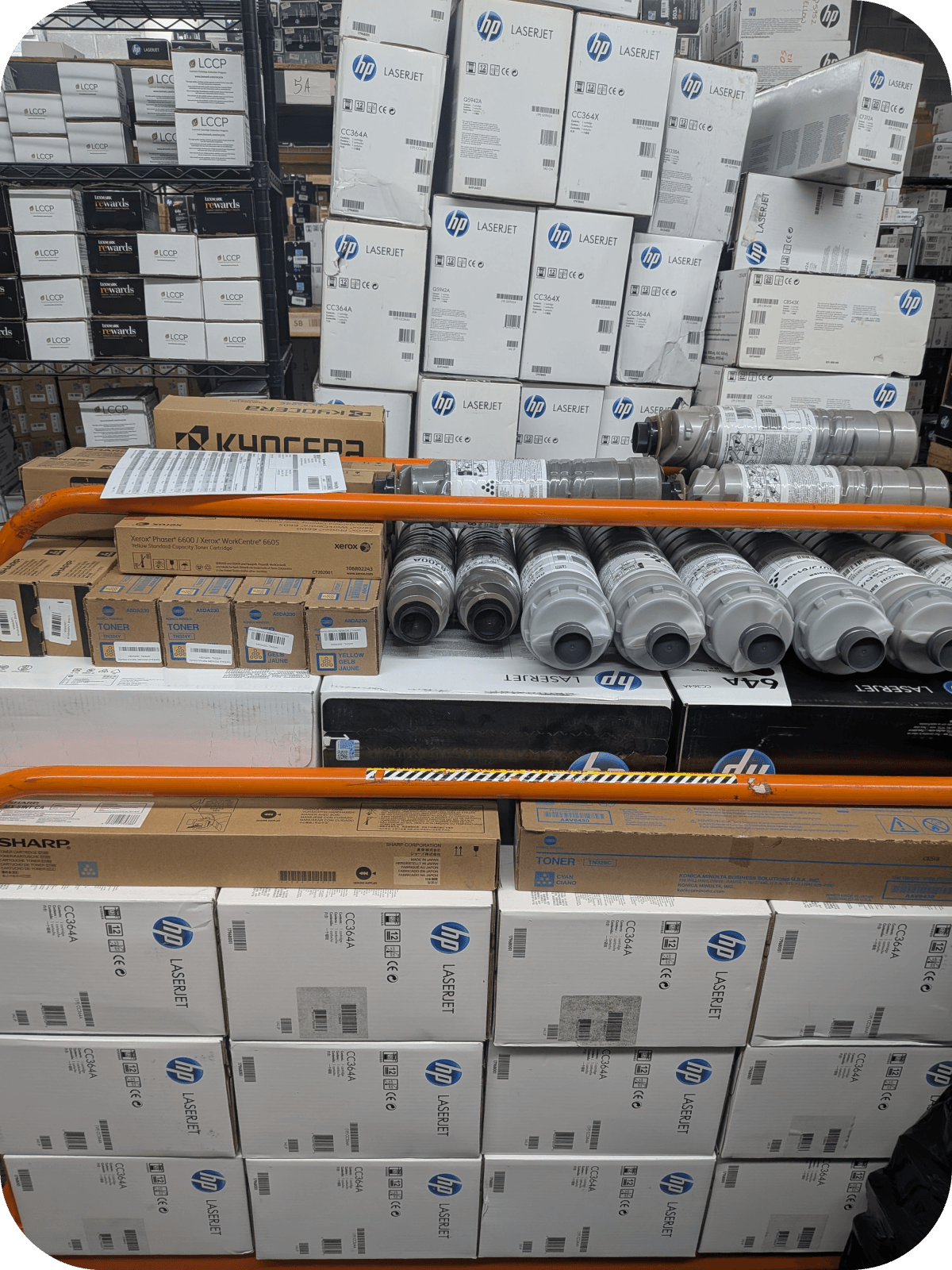
If received toner does not match the original quote, the buyer compares the shipment with the submitted model numbers, quantities, seals, and box conditions. The offer may be corrected or reduced for affected items. Qualifying cartridges can still be paid, while rejected products may be returned or recycled according to policy.

Why Is Toner Inspected After Delivery?
Toner is inspected after delivery to confirm that the physical inventory matches the information used to prepare the quote.
A quote is normally based on details supplied before shipping, including:
- Manufacturer
- Exact model or part number
- Quantity
- OEM status
- Factory-seal condition
- Box condition
- Ink expiration date
- Submitted photographs
The buyer cannot physically verify these details until the shipment arrives. Inspection protects both sides by confirming which cartridges were delivered and whether their condition matches the original submission.
In our current process, each cartridge is compared with the quote, checked for factory seals and authentication markings, and documented using photographs or video.
What Happens During the Inspection?
The inspection team identifies every cartridge and records any difference between the shipment and the accepted quote.
The process normally includes checking:
- The number of boxes received
- The brand and model of each cartridge
- Whether each product is genuine OEM
- Whether the factory seal remains intact
- Whether authentication labels are present
- The physical condition of each retail box
- Expiration information for ink cartridges
- Whether any unquoted products were included
If everything matches, the order can proceed using the original approved values. If something differs, only the affected items may require an adjustment.
Our FAQ states that inspection is typically completed within one business day of delivery. Payment is processed when inspection is finished. Weekend arrivals may be completed on the next business day.
Common Reasons a Shipment Does Not Match the Quote
A mismatch does not always mean that the seller intentionally provided incorrect information. Model numbers can look similar, quantities can be entered incorrectly, and packaging damage may not be obvious in the original photographs.
| Type of Difference | Possible Result |
|---|---|
| Different model received | Item is repriced or rejected |
| Quantity is lower | Payment reflects the quantity received |
| Quantity is higher | Extra qualifying items may be added |
| Box condition is worse | Item may receive a lower condition grade |
| Box condition is better | Item may qualify for a better grade |
| Factory seal is broken | Item may be rejected |
| Cartridge is compatible or remanufactured | Item does not qualify |
| Ink is expired | Item may be rejected |
| Product is missing authentication labels | Item may not qualify |
| Transit damage occurred | Shipment may require further review |
Incorrect Model Numbers
A different model number can significantly affect the order because two similar-looking cartridges may have different values or eligibility.
For example, a high-yield cartridge and a standard-yield cartridge may share similar packaging but have different part numbers. The received model is valued according to its actual identity, not the model originally entered.
The safest approach is to copy the complete number directly from the box. Include all letters, numbers, colors, and yield designations.
Quantity Differences
A quantity difference changes the order total because payment is based on the number of qualifying items actually received.
If fewer cartridges arrive than listed, the missing units cannot be included in the payout. If more cartridges are included, the additional products must be identified and evaluated.
Our current policy states that qualifying extra items included in a shipment are added at the current applicable rate, even when they were not on the original quote.
Box Condition Differences
A cartridge may remain eligible but receive a different value when the box condition does not match the submitted grade.
A pristine box should not have major dents, tears, writing, tape, water stains, or crushed corners. Minor shelf wear may place the product in a lower grade, while significant damage can reduce its value further.
Current grading guidance describes a B-condition box as having minor cosmetic wear. A C-condition box may have larger tears, holes, heavy dents, or excessive tape. Both may remain eligible at reduced rates when the factory seal and required labels are intact.
Broken Factory Seals
A broken seal can disqualify a cartridge even when the product appears unused.
The factory seal helps establish that the cartridge has not been opened, installed, replaced, or altered. Once the seal is broken, the buyer may be unable to resell the item as a new factory-sealed product.
Avoid opening a box to photograph the cartridge. Photograph the outside packaging, model number, barcode, seal, and authentication markings instead.
Compatible or Remanufactured Products
Compatible, generic, refilled, and remanufactured cartridges may not qualify for an OEM toner buyback program.
A third-party cartridge can resemble a genuine manufacturer product, particularly when it includes the printer brand or compatible model in large text. Check who manufactured the cartridge rather than relying only on the printer compatibility information.
Our current purchasing policy excludes compatible, generic, remanufactured, refilled, used, empty, and open-box cartridges.
Expired Ink Cartridges
Expired ink may be rejected even when its packaging remains sealed and undamaged.
Ink products often include expiration or warranty dates that affect resale eligibility. Toner is evaluated differently because many toner boxes do not carry the same expiration restrictions.
Include clear photographs of all printed dates when requesting a quote for ink cartridges.
Will the Entire Order Be Rejected?
The entire order is not automatically rejected because one or more cartridges do not match the quote.

Qualifying items can still be approved and paid. The affected products are reviewed separately based on their actual model, quantity, condition, and eligibility.
For example, imagine that a shipment contains:
- 10 correctly quoted OEM cartridges
- 2 cartridges with more box damage than reported
- 1 compatible cartridge
- 1 additional eligible cartridge not listed
The correctly quoted products can remain approved. The damaged boxes may receive revised values, the compatible cartridge may be rejected, and the extra qualifying product may be added at its current rate.
This item-by-item process prevents one mistake from automatically invalidating every qualifying cartridge in the shipment.
How Is an Adjusted Offer Documented?
An adjusted offer should be supported by inspection evidence showing why the received product differs from the original submission.
Useful documentation may include:
- A photograph of the model number
- A photograph of the factory seal
- Images of dents, tears, or water damage
- A picture of an expiration date
- Evidence that a cartridge is compatible or remanufactured
- A revised quantity count
- Video showing the inspection
- An updated itemized order
Our current inspection process records cartridges with photographs or video so sellers can see the reason for an adjustment.
If anything is unclear, contact support using the order number and identify the specific product you want reviewed. A precise question is easier to resolve than a general disagreement about the total.
What Happens to Rejected Cartridges?
Rejected cartridges can be returned or recycled according to the seller’s instructions and the buyer’s published policy.
Our current policy gives sellers the option to have non-accepted items returned at no cost or recycled on their behalf. Payment for qualifying accepted products can still proceed.
Before shipping to any toner buyer, check:
- Whether rejected products are automatically returned
- Whether the seller must request a return
- How long the seller has to respond
- Who pays the return shipping cost
- Whether rejected items can be recycled
- Whether accepted items are paid separately
These terms should be reviewed before the inventory leaves your possession.
What If the Toner Was Damaged During Shipping?
Transit damage requires documentation showing the condition of the shipment before and after carrier delivery.

A crushed outer carton, inadequate cushioning, or movement inside the package can damage retail boxes and reduce their resale value. The inspection team may need to distinguish between pre-existing box damage and damage caused during transportation.
Before shipping:
- Photograph every retail box
- Photograph the packed layers
- Use a strong outer carton
- Cushion the bottom, sides, and top
- Fill all empty space
- Prevent the products from moving
- Photograph the sealed outer carton
- Keep the carrier receipt and tracking details
Never ship toner using only the manufacturer’s retail box. Place the product inside a separate shipping carton, and apply the carrier label only to that outer box.
Our prepaid UPS shipments currently include up to $125 in insurance. If a shipment is lost or damaged, we handle the carrier claim after the seller contacts us.
Discuss additional protection before shipping when the inventory value is substantially higher than the included coverage.
Can a Seller Dispute an Inspection Difference?
A seller can ask the buyer to review an inspection difference when the evidence or adjustment appears incorrect.
Start by comparing:
- The original inventory list
- Photographs taken before shipping
- The accepted quote
- Carrier tracking
- The inspection photographs or video
- The revised itemized order
Contact the buyer promptly and provide the order number, cartridge model, quoted condition, and reason for the disagreement. Attach the original photographs when they support the submitted information.
Keep the discussion focused on the specific item. For example:
The HP CF289X was submitted as factory sealed and Grade A. My pre-shipment photographs show all corners and the intact seal. Could you review the inspection images and explain the Grade B adjustment?
Clear documentation gives both sides something specific to compare.
How Can Sellers Prevent Quote Adjustments?
Sellers can prevent most adjustments by recording the inventory carefully and disclosing visible issues before accepting the quote.
Use this checklist:
- Copy every model number directly from the product box.
- Group identical models and count them twice.
- Confirm that each product is genuine OEM.
- Check every factory seal and authentication label.
- Separate open, compatible, remanufactured, used, or empty products.
- Record expiration dates for ink cartridges.
- Photograph all sides of every questionable box.
- Report dents, tears, labels, tape, writing, and water damage.
- Review the itemized quote before accepting it.
- Pack the products inside sturdy outer cartons.
- Include the required order documentation.
- Keep the original inventory list and photographs.
Sellers who are unsure about a product can use the photo option on our toner quote submission form. Clear images allow the model and visible condition to be reviewed before shipping.
Accurate Information Protects the Final Payout
When toner does not match the original quote, the final order should reflect what was physically received and verified during inspection.
A model, quantity, or condition difference may change the value of an affected cartridge. An ineligible product may be rejected, while qualifying items can still be paid. Extra eligible products may also be added at the current rate.
The best protection is a detailed inventory, clear pre-shipment photographs, careful packaging, and a buyer that documents every adjustment. These records make the process easier to understand and give both sides a reliable basis for resolving questions.