
Selling Toner in Bulk: Is There a Minimum, and Do Offices Get a Better Rate?
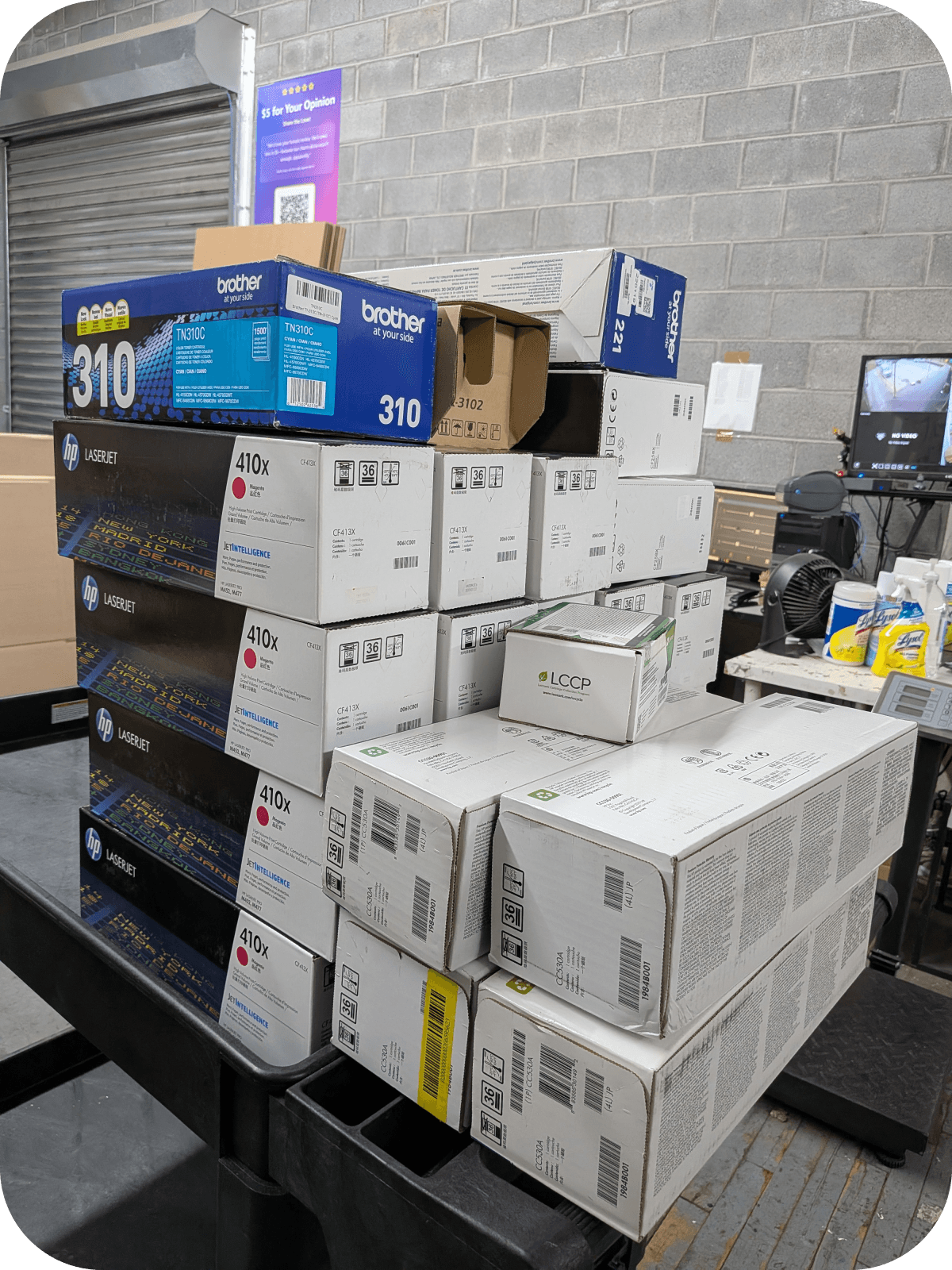
Selling toner in bulk does not always require a minimum quantity, and larger lots do not automatically receive a higher per-cartridge rate. TonerConnect currently states that it buys from single cartridges through full-pallet closeouts. Offers depend on the cartridge model, condition, quantity, and current resale demand.
What Does Selling Toner in Bulk Actually Mean?
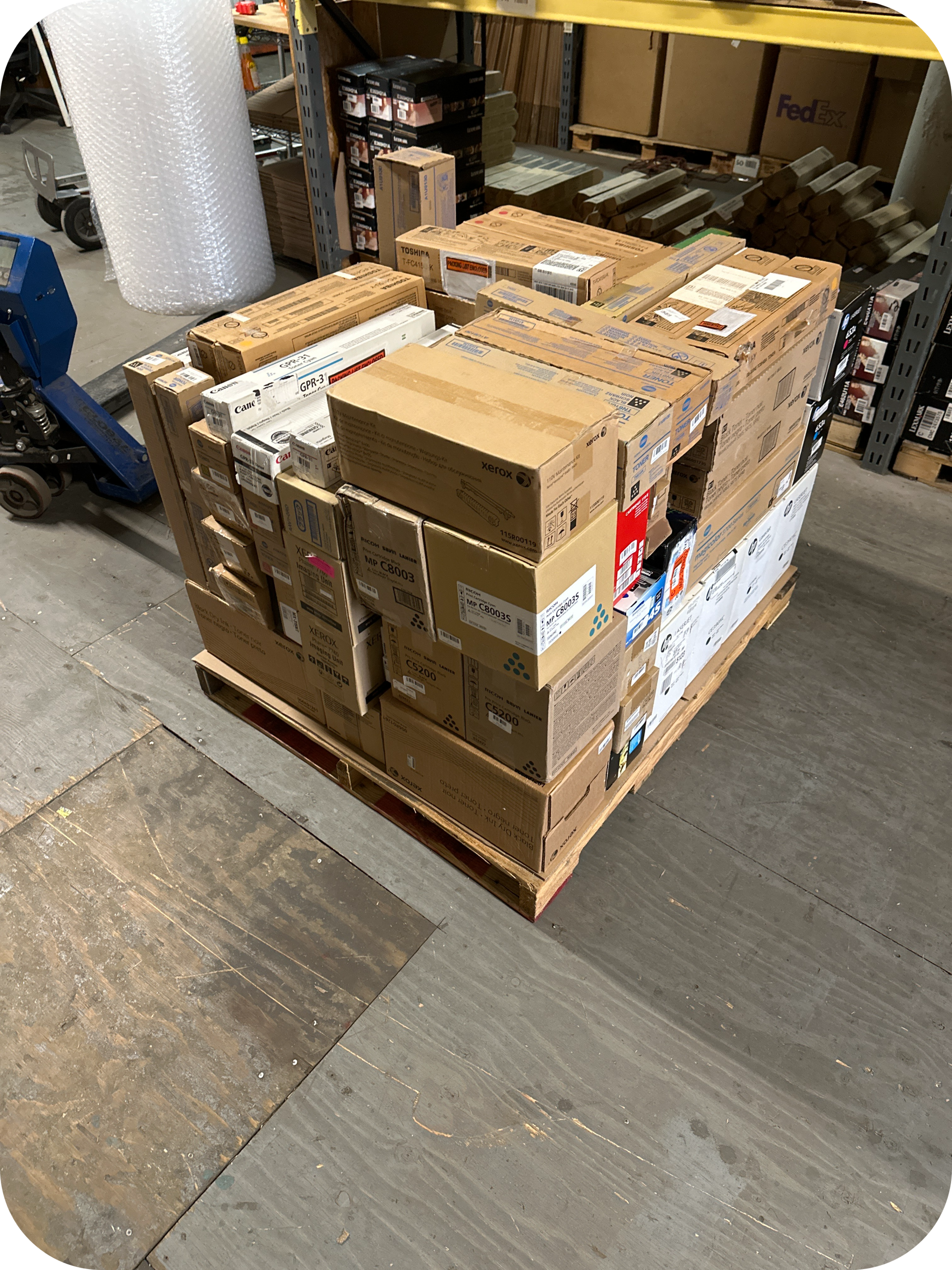
Selling toner in bulk means offering multiple unused toner cartridges in one transaction rather than selling each box separately.
A bulk inventory can contain several units of one SKU or many different cartridge models. Offices, IT resellers, and businesses with excess inventory are common bulk sellers.
Useful definitions are:
- Bulk toner: Multiple cartridges offered together.
- OEM toner: Toner produced or branded by the original printer manufacturer.
- SKU: The identifying product or model number used to distinguish cartridges.
- Factory sealed: Original packaging that has not been opened.
- Bulk buyback: A buyer purchases qualifying inventory through one coordinated transaction.
A 20-cartridge office cleanout and a pallet containing hundreds of boxes can both qualify as bulk inventory.
Is There a Minimum Quantity When Selling Toner in Bulk?
Minimum quantities depend on the buyer, but TonerConnect currently states that it has no minimum and no maximum.
Toner Connect’s current FAQ says it purchases single cartridges as well as full-pallet closeouts. The company also says its prepaid insured shipping arrangement applies to both situations.
That means an office does not need to wait until it has 50 or 100 cartridges before requesting a quote from TonerConnect.
Other buyers can establish their own minimum order quantities.
This distinction matters because Toner Connect’s January 2026 general bulk-selling guide discusses sellers using MOQs of 10–50 units per SKU, but that guidance is about seller strategy. It is not TonerConnect’s current buyback minimum.
Do Offices Get a Better Rate for Selling More Toner?
A larger quantity can influence a quote, but offices should not assume that bulk inventory automatically earns a higher per-cartridge price.
Toner Connect says its payouts depend on brand, model, condition, and quantity.
Its August 2026 resale guide also identifies current demand and factory-seal status as pricing factors.
This means quantity is only one part of the valuation.
For example, 100 cartridges for an obsolete printer may not command a stronger unit price than 10 factory-sealed cartridges for an actively used printer.
The useful question is not simply, “How many cartridges do I have?”
It is, “Which cartridges do I have, and what is their current resale demand?”
Why Can Selling Toner in Bulk Still Benefit an Office?
Bulk selling can reduce the administrative work involved in clearing a large toner inventory.
Selling individual cartridges can require separate listings, photographs, buyer messages, payments, shipments, and returns. A specialized toner buyer can evaluate dozens or hundreds of boxes together.
Bulk transactions can therefore help an office reduce:
- Individual listings.
- Repeated buyer communication.
- Separate shipments.
- Repeated payment processing.
- Staff time spent managing surplus supplies.
A higher per-cartridge rate is not guaranteed.
A simpler transaction can still produce a better operational outcome for an office.
What 2026 Numbers Should Bulk Toner Sellers Know?
Current TonerConnect figures show that bulk transactions can vary substantially in size and value.
As of October 2026, Toner Connect says most of its orders range from $500 to $10,000. The company also states that selected high-demand cartridges can pay up to $400 each.
These are TonerConnect’s company-specific figures.
They are not industry averages or guaranteed payouts.
The same FAQ says there is no minimum or maximum quantity.
An exact quote is therefore more useful than estimating value from a general per-cartridge figure.
Which Offices Are Most Likely to Have Bulk Toner to Sell?
Offices commonly accumulate bulk toner after printer upgrades, relocations, closures, over-ordering, or changes to their printer fleets.
Toner Connect’s September 2026 bulk guide identifies printer upgrades, office closures, relocations, over-ordering, and managed-print changes as common sources of surplus inventory.
Why Do Corporate Offices End Up With Surplus Toner?
Corporate offices can create surplus when printer models change before existing supplies are used.
A company may standardize several departments on a new printer platform.
The older factory-sealed cartridges can then become incompatible with the new equipment.
Toner Connect identifies corporate inventory changes, relocations, and closures as common bulk-selling situations.
Why Do IT Departments Sell Toner in Bulk?
IT departments can accumulate toner during printer-fleet replacements and technology standardization projects.
A large fleet replacement can leave many cartridge SKUs without compatible printers.
Toner Connect specifically identifies printer upgrades as a common source of surplus OEM toner.
An inventory spreadsheet is particularly useful when several departments are involved.
How Should Multi-Location Companies Handle Bulk Toner?
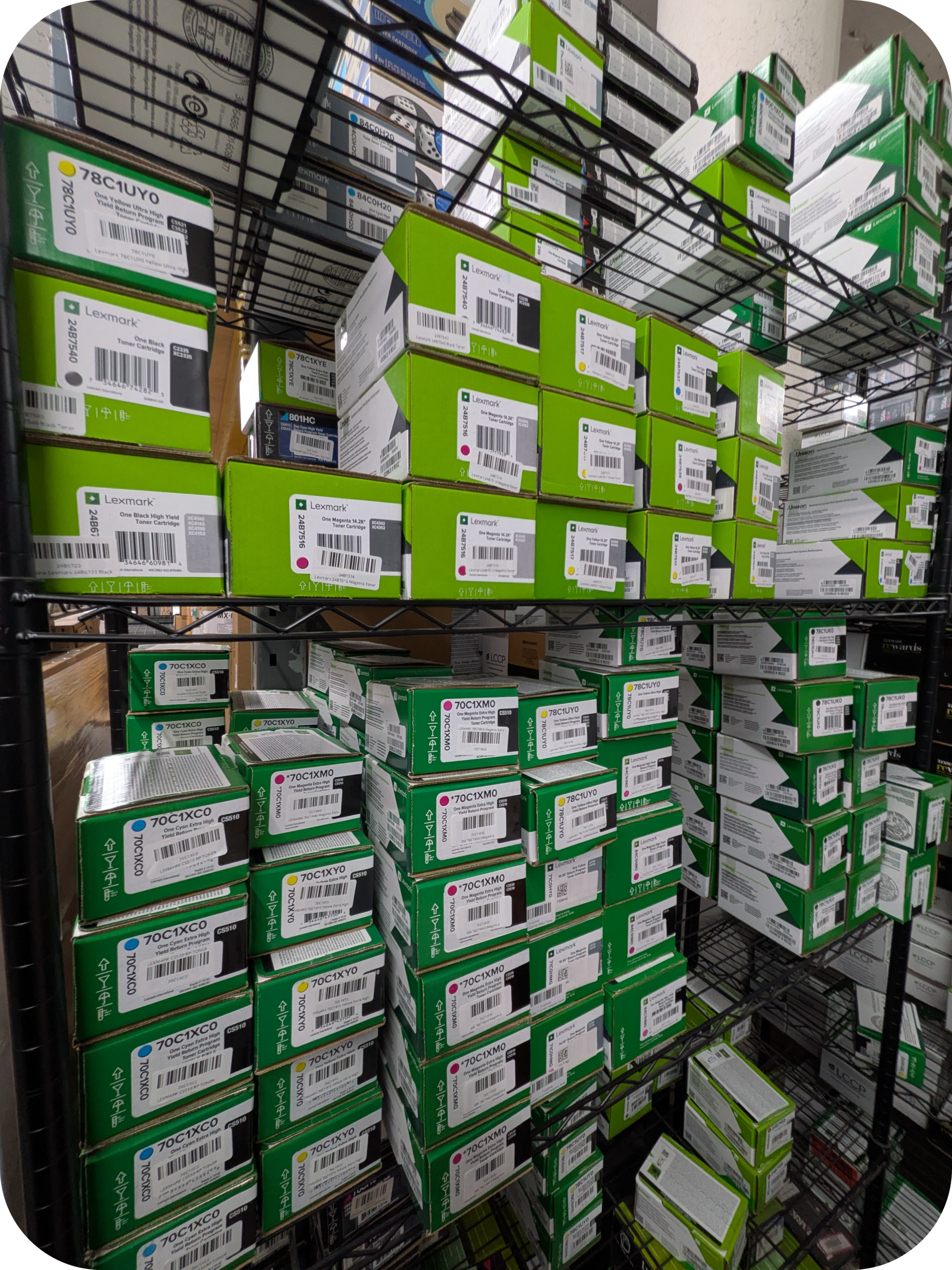
Multi-location companies should create one inventory file that identifies the cartridges stored at each office.
Toner Connect recommends adding a location field when inventory is spread across several branches.
A simple format is:
| Location | Brand | Model | Quantity | Condition |
|---|---|---|---|---|
| Dallas | HP | Exact SKU | 20 | Factory sealed |
| Phoenix | Canon | Exact SKU | 14 | Factory sealed |
| Chicago | Brother | Exact SKU | 8 | Minor box wear |
Ask the buyer whether inventory must be physically consolidated before shipping.
How Is the Value of a Bulk Toner Lot Calculated?
Bulk toner value is calculated from the individual products in the lot rather than from cartridge count alone.
Toner Connect identifies brand, exact model, condition, quantity, and current demand as important quote factors.
A buyer may evaluate:
- Exact SKU
- Manufacturer
- OEM status
- Quantity
- Factory seal
- Box condition
- Current demand
Original retail price does not establish current resale value.
Ten different toner models can therefore receive ten different per-unit valuations within one bulk quote.
Does Box Condition Affect a Bulk Toner Rate?
Yes, packaging condition can affect the value of cartridges inside a bulk lot.
Toner Connect recommends documenting box condition when preparing unused cartridges for resale.
A crushed, water-damaged, or opened package can be treated differently from a clean factory-sealed box.
For bulk sellers, inspect every group before submitting quantities.
Do not assume every box on the same shelf has the same condition.
How Should an Office Prepare Toner Before Requesting Bulk Pricing?
Offices should sort the inventory by brand and model, verify quantities, check seals, and document packaging condition.
Toner Connect’s September 2026 bulk guide recommends auditing supply locations and creating one master inventory.
A practical process is:
- Search every toner storage area.
- Separate unused toner from spent cartridges.
- Group cartridges by manufacturer.
- Sort each brand by exact model.
- Count identical models.
- Check factory seals.
- Record box damage.
- Photograph questionable items.
- Enter everything into a spreadsheet.
For additional preparation guidance, see TonerConnect’s guide to preparing unused cartridges for resale.
What Information Does a Bulk Toner Buyer Need?
A buyer generally needs the manufacturer, exact SKU, quantity, OEM status, and condition of each cartridge.
Toner Connect’s August 2026 seller guide identifies those details as the basic information needed to evaluate unused toner.
For example:
HP | CFXXX | 24 units | OEM | Factory sealed | Good boxes
Large offices should use a spreadsheet instead of typing hundreds of individual entries.
Clear photographs can help document unusual products or damaged packaging.
Should an Office Sell Toner Individually or in Bulk?
Individual selling offers more control over each listing, while bulk selling reduces the number of transactions an office must manage.
Toner Connect notes that individual marketplace sales can involve separate listings, customer communication, shipping, and possible returns.
A specialized buyer can be practical when an office has dozens or hundreds of cartridges.
A small office with three premium cartridges may find individual listings manageable.
A corporation clearing 300 boxes may place greater value on a consolidated transaction.
Should Offices Compare the Highest Offer or the Net Return?
Offices should compare net return because selling fees and shipping expenses can reduce the value of a higher advertised price.
Toner Connect’s buyer guidance recommends comparing what the seller actually receives after transaction costs.
A simple calculation is:
Net return = payment received − seller fees − seller-paid shipping − other transaction costs
Staff time also matters for a large cleanout.
A slightly higher individual selling price can lose some of its advantage when employees must manage dozens of separate transactions.
Does Location Matter When Selling Toner in Bulk?
Location can affect shipping and local selling options, while an online buyer can make bulk resale available beyond major metropolitan areas.
Toner Connect’s 2026 bulk guide notes that local buyers can be convenient in large markets, while online buyers broaden the potential selling area.
This distinction matters for U.S. businesses in smaller cities or areas without specialized local toner buyers.
Multi-location corporations should also ask whether separate office shipments are permitted.
Logistics can affect the practical value of an offer.
Should Schools and Government Offices Sell Bulk Toner the Same Way?
Public institutions should check their own surplus-property and procurement rules before selling organization-owned toner.
Toner Connect’s 2026 guidance notes that schools and government organizations may need authorization and an audit trail before disposing of surplus inventory.
The exact requirements vary by institution and jurisdiction.
Documenting the inventory, approval, sale terms, and final disposition can help preserve that record.
What Should an Office Do With Toner That Cannot Be Sold?
Unsellable toner should be considered for internal reuse, manufacturer return, remanufacturing, or appropriate recycling.
The U.S. EPA says spent toner cartridges can be returned to manufacturers or remanufacturers for refilling, refurbishment, cleaning, and resale.
Used toner is different from factory-sealed surplus inventory.
Toner Connect focuses on qualifying unused OEM supplies rather than spent cartridges.
The EPA’s toner cartridge guidance provides an appropriate starting point for used cartridges.
What Questions Should Offices Ask a Bulk Toner Buyer?
Offices should ask about eligibility, pricing, shipping, inspection, and payment before sending inventory.
A higher headline quote does not necessarily mean a higher net return.
Ask:
- Is there a minimum quantity?
- Does quantity affect the unit offer?
- Which OEM brands are accepted?
- Must every cartridge be factory sealed?
- How is damaged packaging graded?
- Who pays shipping?
- Can the offer change after inspection?
- How quickly is payment issued?
- Can multiple office locations participate?
Get important terms in writing before shipping.
Does Toner Connect Have a Minimum for Bulk Toner Sales?
No, TonerConnect’s current FAQ says there is no minimum or maximum quantity.
The company says it purchases everything from a single cartridge to full-pallet closeouts.
Businesses with larger inventories can use TonerConnect’s bulk toner selling guide to organize their stock.
Sellers can also request a toner quote through Toner Connect after recording their exact models and quantities.

What Should Offices Expect When Selling Toner in Bulk?
Offices should expect the buyer to value each cartridge according to its model, condition, quantity, and current demand rather than applying one guaranteed bulk rate.
The biggest advantage of selling toner in bulk is often efficiency. A business can consolidate a large surplus inventory instead of managing many separate consumer sales.
There is also no need to assume that you need a warehouse full of toner before starting. Toner Connect currently reports no minimum and no maximum, while quantity remains one of several factors considered when an offer is calculated.
For an office cleanout, the practical first step is simple: count the cartridges, record the exact SKUs, preserve the factory seals, document box condition, and request an inventory-specific quote.