

How to Recycle Toner Cartridges for Cash and Compliance?
Toner cartridges are a common office supply in businesses, schools, and government facilities. While many organizations regularly replace cartridges, fewer realize that unused or surplus toner can still hold value. Learning how to recycle toner cartridges for cash and compliance helps businesses recover costs while meeting environmental and regulatory standards.
Instead of throwing cartridges away, companies can recycle, resell, or participate in buyback programs that support sustainability and proper documentation. This guide explains how toner recycling works and how businesses can turn surplus cartridges into financial and environmental benefits.
Why Recycling Toner Cartridges Matters?
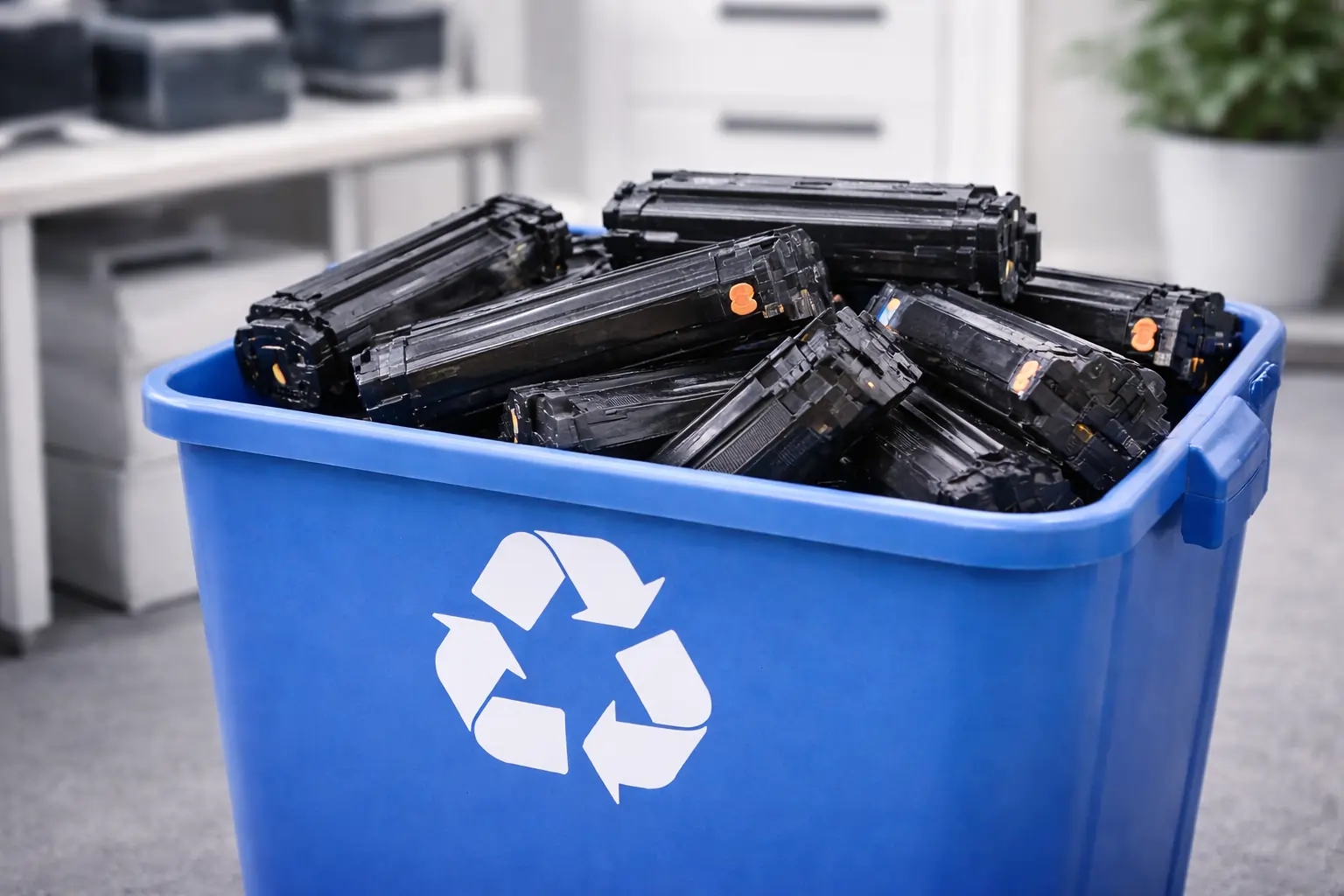
Toner cartridges are made from durable plastics, metals, and internal components that can take hundreds of years to decompose in landfills. When disposed of improperly, they contribute to environmental waste and resource loss.
Recycling toner cartridges helps:
- Reduce landfill waste
- Recover reusable materials
- Support environmental sustainability
- Extend the lifecycle of office supplies
According to the U.S. Environmental Protection Agency (EPA), recycling electronic products and printer supplies helps conserve natural resources and reduce pollution.
The Difference Between Recycling and Reselling Toner
Many people use the term recycling broadly, but there are two primary ways toner cartridges can be reused.
Recycling Used Cartridges
Used cartridges are typically recycled through:
- Manufacturer take-back programs
- Recycling centers
- Office collection initiatives
The materials inside the cartridge can be reused in remanufacturing or repurposed for other products.
Reselling Unused Toner Cartridges
Factory-sealed toner cartridges often retain resale value. Instead of recycling them immediately, businesses may be able to sell surplus cartridges through toner buyback services.
Companies like TonerConnect specialize in purchasing unused toner inventory from businesses and organizations. This allows cartridges to be reused rather than discarded, while also helping businesses recover part of their supply costs.
How to Recycle Toner Cartridges for Cash?
If your organization has unused or surplus toner cartridges, the following steps can help you recover value while maintaining compliance.
1. Identify Surplus Inventory
Start by reviewing storage areas such as:
- Office supply closets
- Warehouse shelves
- IT storage rooms
Look for cartridges that are:
- Factory sealed
- Unused
- In good packaging condition
These cartridges may qualify for resale or buyback programs.
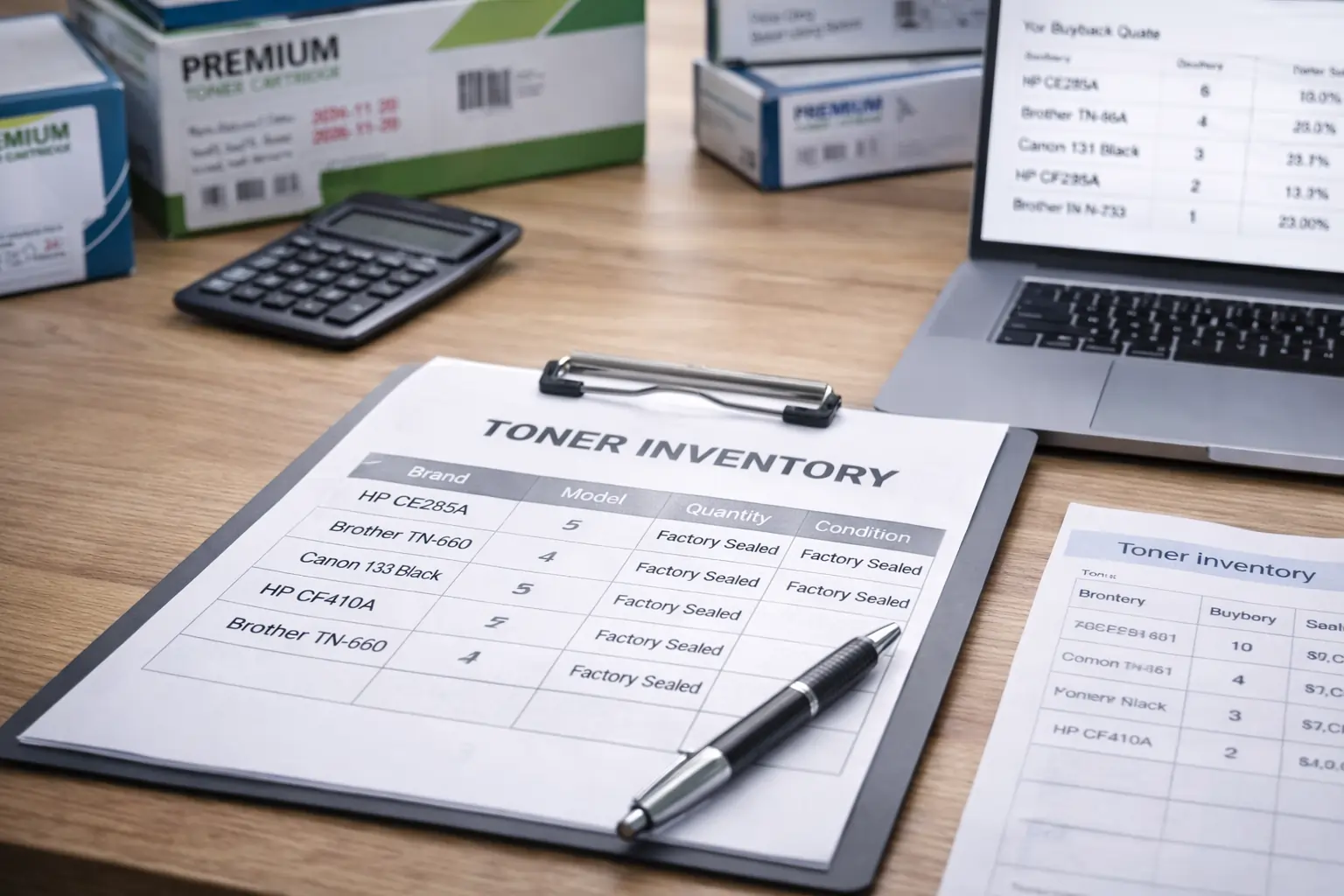
2. Organize Your Toner Inventory
Create a list of the cartridges you want to recycle or sell.
Include:
- Brand name
- Model number
- Quantity
- Packaging condition
Having an organized inventory list makes it easier to obtain quotes from buyers.
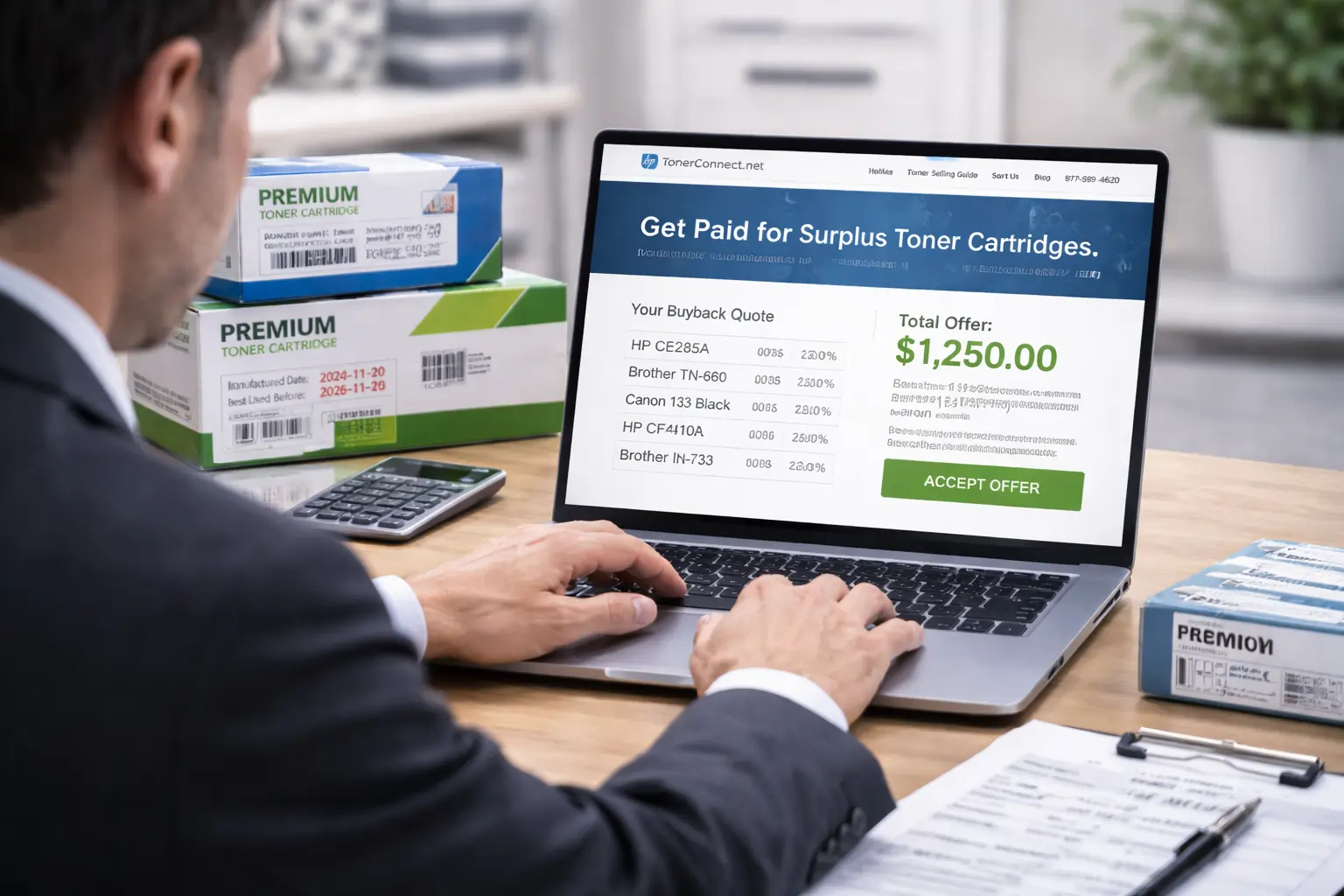
3. Request a Buyback Quote
Businesses can submit their inventory to toner buyback platforms such as TonerConnect to receive pricing offers.
Buyback programs typically evaluate:
- Cartridge model demand
- Quantity available
- Packaging condition
- Manufacturing dates
This process helps determine the resale value of your toner inventory.
4. Ship Cartridges for Inspection
After accepting a quote, cartridges are usually shipped to the buyer for inspection.
Proper packaging is important to prevent damage during transit. Businesses should use protective packing materials and sturdy shipping boxes.
Once the shipment is received and verified, payment is typically issued according to the buyer’s terms.
Compliance Considerations for Toner Recycling
Many organizations must follow internal policies when disposing of office equipment or supplies.
To maintain compliance:
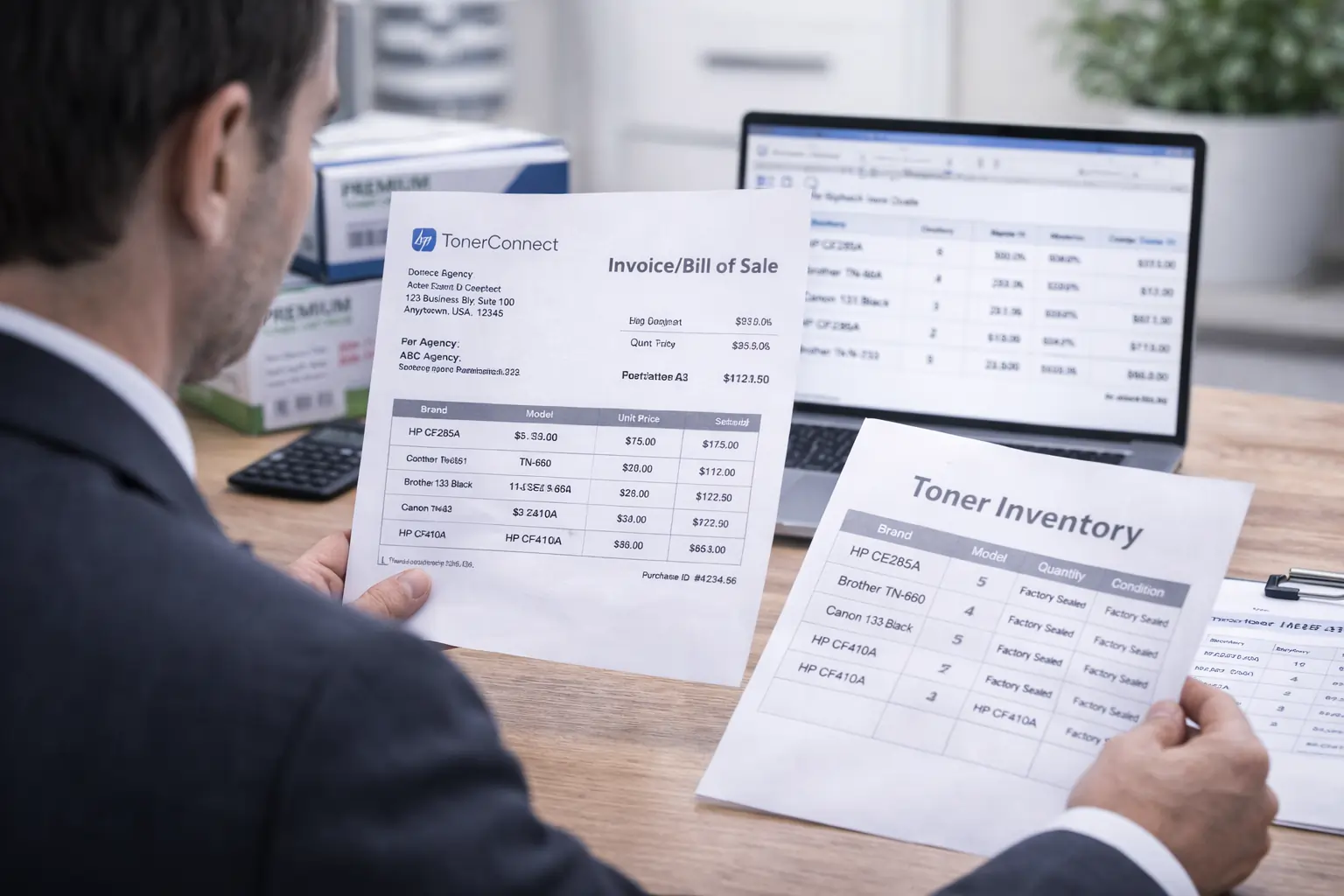
- Document inventory counts before resale
- Obtain internal approval for surplus disposal
- Maintain records of transactions
- Work with reputable buyers
Maintaining proper documentation ensures that toner recycling or resale follows company guidelines and audit requirements.
Benefits of Recycling Toner Cartridges for Cash
Organizations that recycle or resell toner cartridges gain several advantages.
Financial Recovery
Unused cartridges represent sunk costs. Selling them allows businesses to recover part of their investment.
Environmental Responsibility
Recycling supports sustainable practices by reducing waste and conserving resources.
Storage Optimization
Clearing surplus inventory frees up valuable office or warehouse space.
Supply Chain Efficiency
Better inventory management prevents unnecessary over-purchasing in the future.
Tips for Maximizing Toner Resale Value
To get the best return from toner cartridges:
- Keep boxes factory sealed
- Store cartridges in cool, dry conditions
- Avoid writing directly on packaging
- Sell surplus inventory before expiration
Maintaining good storage practices helps preserve cartridge value.
Final Thoughts
Understanding how to recycle toner cartridges for cash and compliance helps businesses manage office supplies more efficiently while supporting environmental responsibility.
By identifying surplus inventory, organizing toner supplies, and working with reliable buyback programs, organizations can transform unused cartridges into financial recovery instead of landfill waste.
Recycling and reselling toner cartridges not only supports sustainability but also helps companies maintain organized inventory and reduce operational costs.