
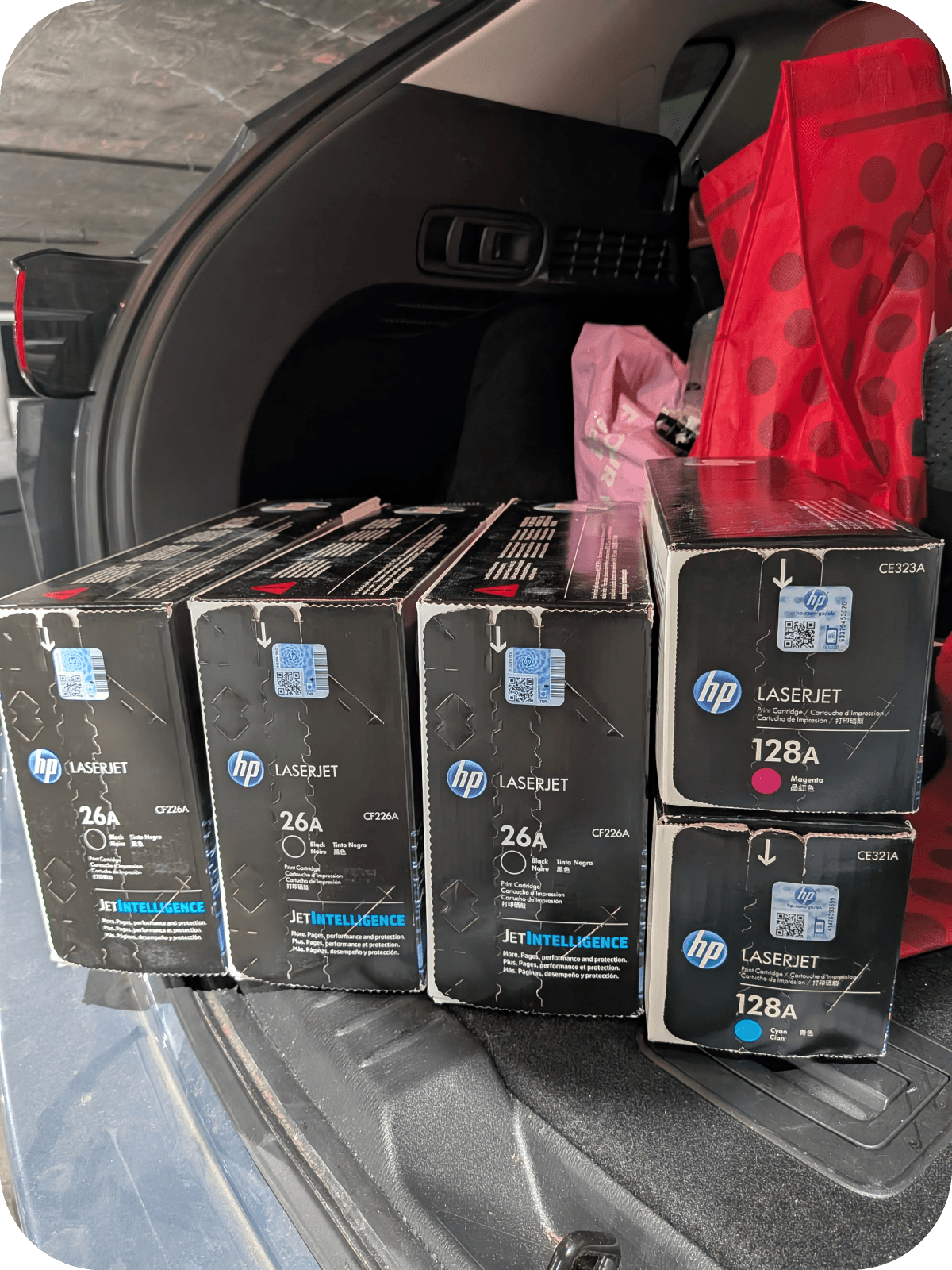
Before choosing a toner supplier, ask about cartridge type, OEM authenticity, printer compatibility, inventory, total pricing, delivery, returns, warranties, and account support. Clear written answers help businesses compare vendors fairly, avoid counterfeit or incorrect products, and understand exactly how the supplier will resolve delays, damage, defects, or ordering mistakes.
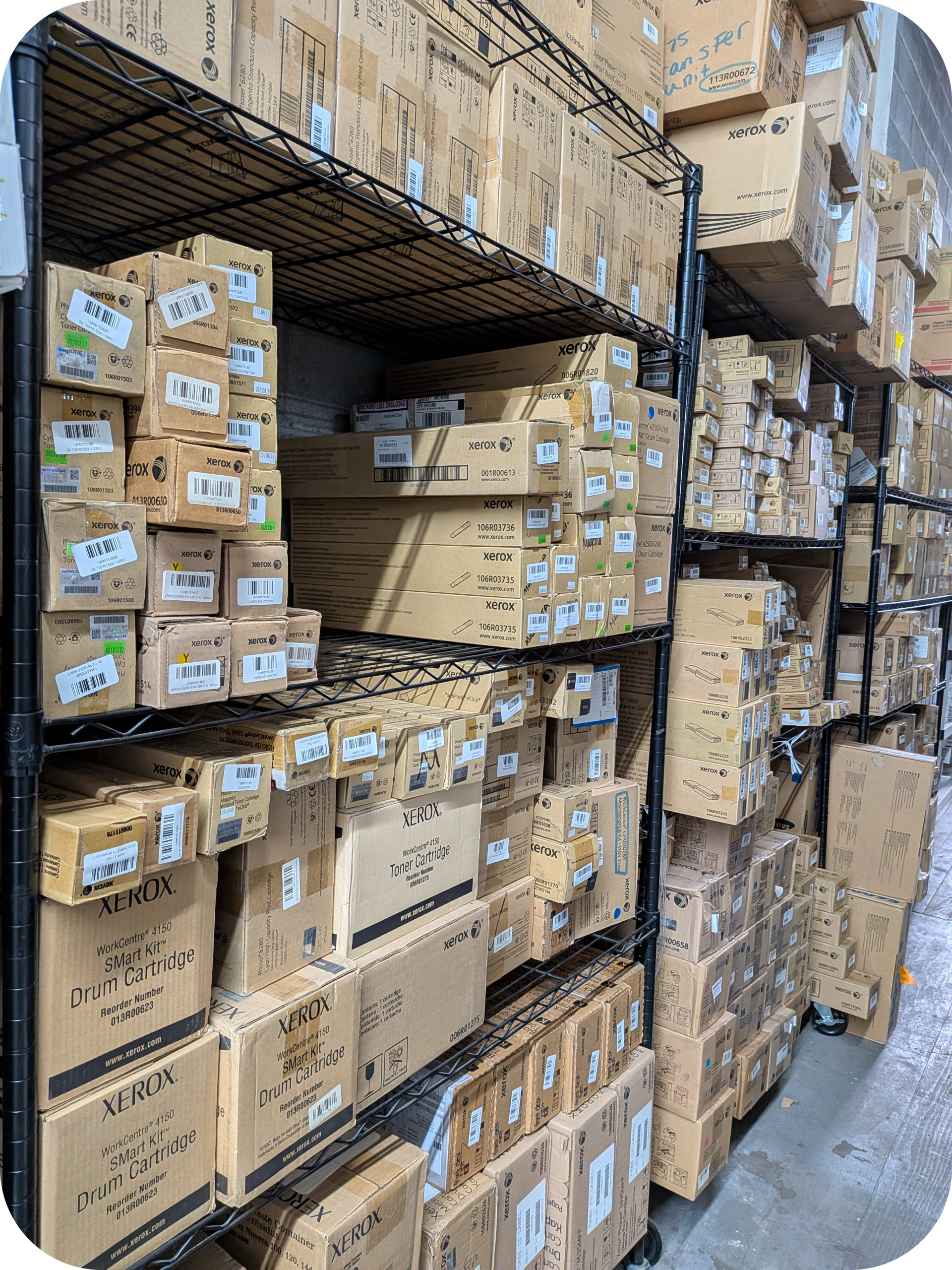
Why Should You Question a Toner Supplier Before Ordering?
You should question a toner supplier because similar-looking offers can involve very different products, costs, and service terms.
One vendor may quote genuine OEM toner, while another quotes a remanufactured or compatible cartridge. Shipping charges, return restrictions, restocking fees, and delivery times can also change the actual value of an offer.
Request written answers whenever possible. A documented response gives your purchasing team a clear reference if the delivered product or final invoice does not match what was promised.
Questions About the Cartridges
The first group of questions should establish exactly what the supplier plans to deliver.
1. What Types of Toner Cartridges Do You Sell?
The supplier should clearly distinguish between OEM, compatible, remanufactured, refilled, used, and open-box toner.
These categories are not interchangeable:
- OEM toner is manufactured by the original printer company.
- Compatible toner is a new third-party product designed for a particular printer.
- Remanufactured toner is a used cartridge that has been cleaned, repaired, and refilled.
- Refilled toner has received additional toner but may not have been fully rebuilt.
- Open-box toner is no longer sealed in its original retail condition.
Avoid vague descriptions such as “OEM equivalent” or “premium compatible” when your organization specifically requires original manufacturer supplies.
2. Are Your OEM Cartridges Genuine and Factory Sealed?
A credible supplier should be willing to confirm that products represented as OEM are genuine, unused, and factory sealed.
Ask whether security labels, manufacturer seals, barcodes, and original packaging will remain intact. Request that “genuine OEM” appear on the quotation and invoice.

HP provides instructions for examining toner security labels and validating certain products through a QR code. HP also uses tamper-evident packaging features on Original HP supplies.
Security features are useful, but they should be considered together with the supplier’s identity, invoice, pricing, and product condition.
3. Can You Verify Compatibility With Our Exact Printer Models?
The supplier should verify each cartridge using the complete printer model and manufacturer part number.
Provide more than the printer brand. A useful compatibility request includes:
- Complete printer model
- Cartridge number
- Manufacturer part number
- Required color
- Standard or high-yield preference
- Country or region of the printer
- Quantity required
Ask the supplier to identify any substitutions before shipping. A replacement part number should never appear unexpectedly in the delivery.
4. Are These Cartridges New Inventory, Older Stock, or Open-Box Products?
The supplier should disclose the condition and source of the inventory before you order.
Older toner can remain usable, but packaging condition and printer demand may matter to the purchaser. Ask whether the boxes have fading, crushing, writing, labels, tears, missing security marks, or broken seals.
If the products are clearance, discontinued, or open-box inventory, request current photographs rather than relying only on manufacturer stock images.
Questions About Availability and Delivery
The next questions establish whether the supplier can fulfill the order when and where it is needed.
5. Is the Toner Physically in Stock?
The supplier should tell you whether the cartridges are currently available or must be sourced after the order is placed.
Ask:
- How many units are available?
- Where are they stored?
- Can the quantity be reserved?
- Will all items ship together?
- Are any cartridges on back order?
- Is the product discontinued?
- Is there a manufacturer replacement model?
An online listing marked “available” does not always mean the item is ready to leave the warehouse.
6. When Will the Order Ship and Arrive?
The supplier should provide a realistic processing time and estimated delivery date.
Clarify whether “two-day shipping” refers to the carrier’s transit time or the complete period from order placement to arrival. Processing may occur before the carrier receives the package.

The Federal Trade Commission states that online sellers must ship within the promised period. If no period is provided, federal rules generally require shipment within 30 days.
For time-sensitive orders, request the expected shipment date in writing.
7. What Happens if an Item Is Back-Ordered or Delayed?
The supplier should explain how it communicates delays and what options the buyer receives.
A useful policy should address:
- Back-order notifications
- Partial shipments
- Substitute products
- Revised delivery estimates
- Order cancellation
- Refunds for unavailable products
- Expedited alternatives
Tell the supplier not to substitute cartridges without written approval. A compatible or lower-yield cartridge should not replace an ordered OEM or high-yield model automatically.
8. How Will the Cartridges Be Packaged?
The supplier should use an outer shipping carton and sufficient protection to prevent damage to the manufacturer boxes.
Ask whether the supplier:
- Places shipping labels on an outer carton
- Uses cushioning around retail boxes
- Separates heavy items from smaller cartridges
- Provides tracking
- Insures high-value orders
- Requires a delivery signature
- Documents damaged shipments
Manufacturer boxes can lose resale or return value when shipping labels, tape, or heavy damage are applied directly to them.
Questions About Pricing and Purchasing
The advertised unit price does not show the complete financial impact of an order.
9. What Is the Total Delivered Cost?
The supplier should provide an itemized quotation showing every charge.
Request details for:
- Unit price
- Shipping
- Taxes
- Handling fees
- Minimum order requirements
- Credit-card surcharges
- Expedited delivery
- Account fees
- Restocking fees
- Return shipping
Compare the same cartridge part number, condition, yield, and quantity across suppliers. An OEM cartridge should not be compared directly with a remanufactured alternative as if the products were identical.
10. Do You Offer Volume, Contract, or Account Pricing?
The supplier should explain whether better pricing or terms are available for recurring business orders.
Ask whether the company offers:
- Quantity discounts
- Contract pricing
- Price holds
- Scheduled ordering
- Purchase-order processing
- Invoice terms
- Tax-exempt accounts
- Multi-location billing
- Department-level spending controls
Confirm how long quoted pricing remains valid. A discount on the first order may not apply to future purchases.
11. Which Payment Methods Do You Accept?
The supplier should provide secure payment options and complete transaction records.
For an unfamiliar online seller, be cautious if payment is requested through gift cards, cryptocurrency, an external payment application, or a transfer method that offers limited recourse.
The FTC recommends safer payment methods such as credit cards and advises marketplace buyers to keep transactions within the platform’s approved payment system.
Business customers should also ask whether invoices identify the cartridge manufacturer, part number, quantity, and product type.
Questions About Returns and Support
A supplier’s value becomes much clearer when an order goes wrong.
12. What Is Your Return Policy for Incorrect or Incompatible Toner?
The supplier should explain the return window, required condition, fees, and shipping responsibility.

Ask these specific questions:
- How many days do we have to request a return?
- Can an opened cartridge be returned if it is incompatible?
- Who pays return shipping?
- Is there a restocking fee?
- Do clearance items have different rules?
- How long does a refund take?
- Is store credit issued instead of a refund?
The FTC recommends reviewing return periods, refund terms, return-shipping costs, and restocking fees before completing an online purchase.
13. How Do You Handle Defective or Damaged Cartridges?
The supplier should have a documented process for replacements, refunds, and shipping claims.
Ask what evidence is required. The supplier may request photographs of the shipping carton, retail box, security labels, cartridge, printer message, or printed pages.
Also confirm:
- Whether the supplier or manufacturer handles the claim
- Whether a replacement ships before the return is completed
- Who pays the return cost
- How quickly a replacement is processed
- Whether the policy covers leaking or physically damaged cartridges
Do not discard packaging until the cartridge has been installed and tested.
14. Who Will Help Us After the Sale?
The supplier should provide a clear customer-service channel for order, compatibility, and account issues.
Businesses may need:
- A dedicated account representative
- Telephone and email support
- Order tracking
- Purchase-order assistance
- Tax-exempt account support
- Multi-location delivery management
- An escalation contact
- Online order history
- Usage or spending reports
Test the support process before placing a large order. Send a detailed question and evaluate whether the answer is accurate, complete, and provided in writing.
15. Can You Provide Business References or a Trial Order?
A serious supplier should be willing to discuss a small trial order or provide relevant references for a major contract.
A trial purchase allows you to evaluate:
- Order accuracy
- Packaging quality
- Delivery time
- Product condition
- Documentation
- Communication
- Problem resolution
- Invoice accuracy
For online marketplaces, identify the individual seller and examine recent feedback from several sources. The FTC advises buyers not to rely on star ratings alone and to review the seller’s terms, contact information, and written responses.
A Supplier Inquiry You Can Copy
A short written request can produce the information needed for an initial comparison.
We are evaluating suppliers for our printer toner requirements. Please confirm the cartridge manufacturer, part number, yield, condition, and whether each product is genuine OEM, compatible, or remanufactured.
Please also provide current availability, total delivered pricing, expected shipment date, return terms, defective-product procedure, payment options, and any business-account or volume-pricing requirements. Do not make substitutions without written approval.
Attach an inventory containing printer models, cartridge numbers, colors, quantities, and delivery locations. Sending the same request to every candidate makes the responses easier to compare.
How Should You Evaluate the Answers?
You should evaluate the answers for clarity, completeness, consistency, and willingness to provide written terms.
A strong supplier response should:
- Identify products precisely
- Confirm compatibility
- Disclose cartridge type and condition
- Explain stock availability
- Itemize the total cost
- State delivery expectations
- Provide clear return terms
- Describe defect resolution
- Include accessible contact information
- Avoid unexplained substitutions
Be cautious when a supplier avoids direct questions, changes product descriptions, refuses to provide an invoice, or pressures you to order before reviewing the terms.
Ask What Happens to Unused Toner
You should also ask whether unopened cartridges can be returned when printers are replaced or business needs change.
Supplier changes, office closures, equipment upgrades, and purchasing errors can leave organizations with surplus toner. Record the brand, part number, quantity, box condition, assigned printer, and storage location before deciding what to do with it.
If eligible OEM toner can no longer be returned, we may be able to purchase it. Our program accepts qualifying original-brand toner that remains sealed in its manufacturer packaging. Used, refilled, remanufactured, compatible, and open-box cartridges are not eligible.
You can submit unused toner cartridges for a quote using model numbers, an inventory spreadsheet, or clear photographs.
Better Questions Lead to Better Supplier Decisions
The most useful supplier questions focus on the exact product, complete cost, delivery commitment, return terms, and support process.
Ask each candidate the same questions and keep the answers in writing. A trustworthy supplier should make it easy to understand what you are buying, when it will arrive, and how the company will respond if the order does not go as planned.